

Stardust casino Plinko game
Introduction
When I assess fast-format casino games, I usually look past the surface first. That matters with Stardust casino Plinko, because Plinko is one of those titles that looks almost too simple to deserve serious analysis. A ball drops from the top of a pegboard, bounces left and right, and lands in a payout slot at the bottom. That is the entire visual idea. Yet in practice, this format creates a very specific kind of tension that is quite different from slots, roulette, or crash-style products.
What makes Plinko worth a closer look is the gap between appearance and actual play experience. On screen, it feels clean, direct, almost casual. In a real-money session, the same simplicity can turn into a high-variance cycle of small returns, long dry stretches, and occasional sharp spikes if the multiplier table allows it. That contrast is exactly why the game keeps attracting attention in Canada and beyond.
In this article, I focus strictly on the game itself: how Plinko at Stardust casino works, what the risk settings really change, how the rhythm of play develops over time, and what a player should understand before placing even a modest bet. I am not treating this as a general casino review. The useful question here is narrower and more practical: is Plinko actually a good fit for your playing style, and what should you realistically expect from it?
What Plinko is and why it draws so much attention
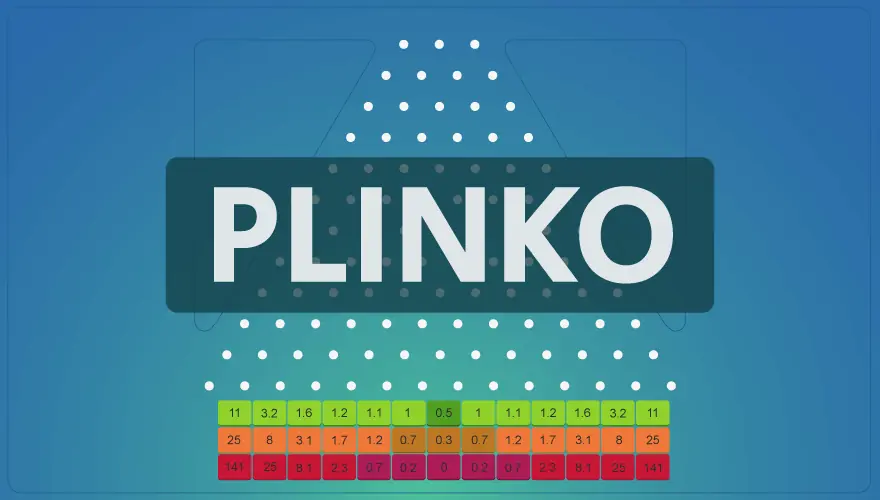
Plinko is a chance-based casino game built around a vertical board filled with pins. The player sets a stake, usually chooses a risk level, sometimes selects the number of rows, and then drops a ball from the top. As the ball collides with the pins, it changes direction repeatedly until it lands in one of several slots at the bottom. Each slot corresponds to a multiplier. The final result is simply the original stake multiplied by that value.
That description sounds basic, and that is part of the appeal. There is almost no learning barrier. A new player does not need to understand paylines, symbol hierarchies, bonus rounds, split hands, or betting maps. The interface communicates the core logic immediately. You click, the ball falls, and the result appears in seconds.
But Plinko became noticeable for a deeper reason than accessibility. It offers a visible form of randomness. In many casino games, the outcome is hidden behind reels, card dealing, or a backend calculation that the player does not really see developing. In Plinko, the path is shown in front of you. Even though the result is still governed by chance, the bouncing movement creates a strong illusion of narrative. Players often feel they are watching the outcome “form” in real time rather than simply receiving it.
That visual journey matters more than many operators admit. A slot spin is often about anticipation before the stop. Plinko is about anticipation during the fall. It compresses suspense into a short, readable sequence. One of the most interesting things I have noticed is that players often remember the path of a near-miss in Plinko more vividly than a routine losing spin on a slot. The board gives randomness a shape, and that makes the session feel more personal than the math really is.
At Stardust casino, this style of game fits players who want immediate action without the visual clutter of a modern video slot. It is also attractive to users who prefer short decision loops. You choose a few parameters, launch the drop, and get the result quickly. There is no long animation cycle unless the interface deliberately slows it down.
How the Plinko mechanic actually works in a real session
At a technical level, the game is built around a distribution curve. The ball starts at the top and encounters a series of pins. At each collision, it moves left or right. Over many drops, results tend to cluster more often around the center than at the outer edges. That is why middle slots usually carry lower multipliers, while edge slots offer much larger ones. The rare outcomes sit where the path is statistically harder to reach.
For the player, the process usually includes three core choices:
- Bet size — the amount risked on each drop.
- Risk level — commonly low, medium, or high.
- Rows — in some versions, the number of levels the ball passes through before reaching the bottom.
These settings are not cosmetic. They shape the payout map and the overall feel of the session. When risk is set to low, the multiplier spread tends to be tighter. You are more likely to land on modest returns or smaller losses, and less likely to see extreme outcomes. When risk is set to high, the board typically becomes more polarized: many low-result slots, fewer meaningful hits, and a small number of very large multipliers. The interface still looks simple, but the statistical profile changes sharply.
The row count can matter just as much. More rows usually mean more possible paths and a wider spread of outcomes. In practice, that can increase the sense of suspense because the ball travels longer and the edge multipliers may become more dramatic. Fewer rows usually produce a more compact result structure. That does not make the game predictable, but it can make the session feel less jagged.
Here is a practical breakdown of how the main settings tend to affect play: Players looking for the strongest real money angle should compare this section with Aviator crash game guide before moving deeper into the site.
| Setting | What it changes | What it means in practice |
|---|---|---|
| Low risk | Narrower multiplier spread | More stable session flow, fewer sharp swings, lower chance of standout returns |
| Medium risk | Balanced payout distribution | Moderate fluctuation, suitable for players testing the format |
| High risk | More extreme multiplier table | Longer cold stretches are possible, but rare top-end results become the main attraction |
| Fewer rows | Shorter path, tighter range | Quicker visual resolution and often less dramatic spread |
| More rows | Longer path, broader distribution | Greater tension during the drop and potentially more volatile result patterns |
What is important here is that the ball’s movement looks physical, but the player should not mistake that for skill-based influence. You are not controlling the trajectory in any meaningful way. The visible bounce pattern is part of the presentation of chance, not a puzzle to solve. That distinction matters because Plinko can tempt some players into reading patterns where none exist.
The rhythm of Plinko and why sessions can feel faster than they look
One reason Stardust casino Plinko can be engaging is tempo. The game has very little friction. There are no long reel sequences, no card decisions, and no need to track multiple side rules. A drop resolves quickly, and that creates a loop that is easy to repeat. From a user-experience standpoint, this is one of Plinko’s strongest qualities. From a bankroll standpoint, it is also one of the main points of caution.
Fast games change how players perceive spending. A slot with elaborate animations can slow the burn rate simply because each round takes longer. Plinko often strips that delay away. Even when the ball takes a visible path, the total action cycle is short. That means a player can place many rounds in a small window without quite noticing how quickly the session is moving. Anyone looking at the site from an SEO-level comparison angle can use reload bonus codes at Stardust Casino to evaluate a closely connected casino feature.
I think this is one of the most overlooked facts about Plinko: its simplicity does not make it gentle. In some cases, it does the opposite. Because each round is easy to understand, there is less natural pause between decisions. The game does not ask much from your attention, so it becomes easy to keep clicking.
The emotional rhythm is also unusual. In slots, players often wait for bonus triggers or special symbols to break the pattern. In Plinko, every drop already feels like a mini-event because the ball’s path is visible from start to finish. That means the title can generate repeated moments of tension without needing a bonus round at all. It is a stripped-down suspense engine.
Another memorable observation: in high-risk mode, Plinko often feels calm on the surface and brutal in the ledger. The screen shows the same neat falling ball each time, but the balance can tell a much harsher story. That disconnect between visual softness and financial volatility is something new players should understand early.
Understanding probabilities, risk levels, and expected outcomes
Before playing Plinko for real money, it helps to separate three ideas that many users blend together: chance of landing in a slot, size of the multiplier in that slot, and overall return profile across many rounds. These are related, but they are not the same thing.
The central slots are usually easier to hit, so they tend to pay less. The outer slots are harder to reach, so they can carry much larger multipliers. This is the basic trade-off behind the format. If the board offers a top multiplier, that does not mean it is remotely likely to appear in a short session. In fact, the rare headline numbers are often there to define the game’s identity more than to shape the average player’s short-term experience.
That is why risk level matters so much:
- Low risk mode usually suits players who want longer sessions and less dramatic balance movement.
- Medium risk mode often works as the most readable version of the format, because it shows what Plinko feels like without pushing extremes too hard.
- High risk mode is for players who accept that many rounds may produce disappointing results while chasing occasional spikes.
It is also important to remember that a short winning streak does not reveal a pattern, and a run of weak outcomes does not mean a strong hit is “due.” Plinko can be visually suggestive in a way that encourages false interpretation. A ball drifting toward a high-value edge slot before bouncing away can feel meaningful, but it is still just one random path among many.
For Canadian players trying Plinko at Stardust casino, the practical takeaway is straightforward: choose your settings based on session goals, not on the hope of decoding the board. If your aim is to stretch your balance and understand the format, lower risk and smaller stakes make sense. If your aim is to chase outsized multipliers, accept in advance that the cost of that choice may be a series of underwhelming rounds. This review section becomes more useful for search-focused visitors when it points them toward no deposit bonus codes at Stardust Casino inside the same casino site.
How Plinko differs from slots and other casino games
Plinko is often mentioned alongside slots because both are easy to start and rely on random outcomes, but the similarity is limited. In a slot, the central experience is built around reels, symbol combinations, and often layered bonus systems. In Plinko, the entire experience is compressed into a single visible event: the descent of the ball and the multiplier it reaches.
This changes the psychology of play. A slot often invites long-form engagement through features, real money free spins, expanding mechanics, or collection systems. Plinko is more immediate and more transparent in structure. There is less to learn, but also less variety inside each round. Whether that feels refreshing or thin depends on the player.
Compared with roulette, Plinko shares a simple betting-result loop, yet the presentation is very different. Roulette gives a fixed wheel and a broad betting map. Plinko gives a dynamic path and a narrower decision set. Compared with crash games, Plinko is less about deciding when to cash out and more about selecting a volatility profile before the round begins.
The comparison below highlights the practical differences: This review section becomes more useful for search-focused visitors when it points them toward coupons guide for Stardust Casino users inside the same casino site.
| Format | Main player input | Session feel | Key tension point |
|---|---|---|---|
| Plinko | Stake, risk level, sometimes rows | Fast, clean, repetitive but visually readable | Watching the ball path resolve into a multiplier |
| Classic slots | Stake and paylines or fixed spin setup | Feature-driven, more varied presentation | Reel stop and bonus trigger potential |
| Roulette | Bet placement across wheel outcomes | Structured, table-oriented, less visual storytelling | Ball landing on a final number or color |
| Crash games | Stake and cash-out timing | Decision-heavy, pressure-based | Choosing whether to exit before the round ends |
If I had to summarize the difference in one line, I would say this: slots are built around hidden combinations, while Plinko is built around visible distribution. That is why it appeals to players who want to see the outcome unfold rather than just receive it.
Where Plinko performs well and where it can disappoint
Plinko has clear strengths. The first is accessibility. A player can understand the basic idea almost instantly. The second is pace. Sessions move quickly, which suits users who dislike long intros or overloaded interfaces. The third is clarity of concept. You always know what just happened and why the displayed multiplier matters.
There is also a real advantage in how configurable the game can be. Risk settings and row options let players shape the tone of a session more directly than many slot products do. You may not control outcomes, but you do influence the style of variance you are willing to face. That is a meaningful distinction.
Still, the format has limitations. The most obvious is repetition. Even with adjustable settings, the core action does not fundamentally change. If you need evolving features, bonus rounds, or narrative progression, Plinko may feel thin after the novelty wears off. Its strength is focus, but focus can also become monotony.
Another weak point is the deceptive softness of the interface. Because the board looks playful and the rules are easy to follow, some players underestimate how severe the swings can become, especially in high-risk mode. This is not a problem with the design itself; it is a problem with user expectation. Plinko looks friendlier than it sometimes behaves.
On a practical level, I would frame its pros and cons like this:
- Strong side: easy to learn, quick to play, visually intuitive, clear result logic.
- Strong side: adjustable risk profile makes it flexible for different bankroll strategies.
- Weak side: repetitive structure may not hold players who want layered content.
- Weak side: high-risk settings can drain a balance quickly despite the calm presentation.
- Weak side: visible ball movement may encourage false pattern reading.
Who this format suits best, and who may prefer another style
In my view, Stardust casino Plinko suits players who value directness. If you enjoy casino products that explain themselves immediately and deliver outcomes fast, this game has a lot going for it. It also fits users who like to choose between a steadier session and a more aggressive payout curve without learning a large rulebook. This part of the review becomes more useful when it is compared with is Stardust Casino legal for Canadian players, especially for players who care about bonuses, payments, and account access.
It can be a good match for:
- players who prefer short rounds and quick feedback;
- users who like visible randomness rather than hidden reel math;
- people testing different volatility profiles with modest stakes;
- players who find modern video slots too busy or too feature-heavy.
It may be a weak fit for:
- players who enjoy strategic decision-making during each round;
- users looking for deep bonus structures or long-form progression;
- people who are uncomfortable with abrupt balance swings;
- anyone who tends to chase rare outcomes after near misses.
If someone tells me they want immersive slot features, themed presentation, and changing round dynamics, I would not point them to Plinko first. If they want a stripped-back chance game with immediate feedback and adjustable intensity, I would. That is the real dividing line.
For some readers, the alternative spelling Star dust casino may appear in search queries, but the practical assessment remains the same: the value of this page lies in understanding Plinko as a format, not in dressing it up as something more complex than it is.
What to check before launching Plinko for real money
Before starting a session, I recommend looking at a few concrete points rather than relying on instinct. These checks are simple, but they can prevent the most common mistakes.
- Review the risk setting first. Do not treat low, medium, and high as decorative labels. They materially affect how your bankroll may behave.
- Use a stake that matches the pace. Because rounds resolve quickly, even a modest bet can add up faster than expected over many drops.
- Understand what top multipliers represent. They are usually rare outcomes, not realistic session baselines.
- Test the visual rhythm before increasing stakes. A demo mode, if available, is useful not because it predicts results, but because it shows how quickly the loop can pull you in.
- Set a session boundary. Plinko’s short cycle makes it easy to keep playing without a natural stopping point.
If I had to reduce all of this to one practical warning, it would be this: do not confuse easy rules with low intensity. That misunderstanding causes more trouble in Plinko than the mechanic itself.
Final verdict on Stardust casino Plinko
Stardust casino Plinko offers a very specific casino experience: fast rounds, visible randomness, adjustable risk, and a clean structure that wastes no time explaining itself. Its main strength is not novelty for its own sake, but clarity. You know what you are doing, you see the result unfold, and you can tailor the session toward steadier returns or sharper swings.
That said, the game deserves a measured approach. Its interface is simple, but the underlying experience can vary dramatically depending on the selected risk level and row setup. In lower-risk configurations, it can feel controlled and easy to manage. In higher-risk modes, it can become punishing quickly, with long stretches that only make sense if you knowingly accept the trade-off for rare larger multipliers.
I would describe Plinko as a strong option for players who want direct action without the complexity of slot features or table-game rules. I would not recommend it to players who need strategic depth, evolving content, or a slower decision cycle. The format is honest about what it is: a chance-driven drop game where suspense comes from the path, not from layered systems.
So, is Plinko worth trying at Stardust casino? Yes, if you want a transparent, fast-moving format and you understand that the calm visual style can hide very different payout behavior depending on your settings. That is the key point. Plinko is simple to enter, but not always simple to manage. For the right player, that is exactly the appeal. For the wrong one, it can feel repetitive or harsher than expected.
FAQ
How does Plinko work when a ball is released?
A coin or ball is dropped from the top onto the Plinko board. It bounces off pegs and lands in a slot at the bottom where a multiplier is applied to the stake. Round results are shown right after the ball finishes.
What does the multiplier mean for payouts in Plinko?
The multiplier is the factor applied to the amount staked for that round. If the ball lands in a higher-value section, the multiplier increases accordingly. The balance change reflects the stake combined with the round result.
Does demo mode affect Plinko volatility or the game’s risk level?
Demo mode uses the same core mechanics of Plinko ball drops, but it is not real-money play. Risk level and the distribution of outcomes follow the game logic, yet demo rounds are for practice. Switching back to real mode will resume betting with real funds.